IS KDP STILL WORTH PURSUING IN 2026?
Is KDP dead, or is it still worth your time in 2026?
Short answer. Yes, KDP is still worth it.
Honest answer. It depends on what you expect from it and how you approach it.
Let us walk through what has changed, what still works, and whether you should keep going or jump ship.
UNDERSTANDING WHERE KDP STANDS TODAY
Quick recap of what KDP offers
Kindle Direct Publishing, or KDP, is Amazon’s self publishing platform. You upload a book, set your price, choose categories and keywords, and Amazon handles printing, delivery, and digital downloads. You earn royalties from each sale.
You can publish:
Ebooks
Paperbacks
Hardcovers
Low or medium-content books, like journals or workbooks
You do not need to pay up front for printing. You do not need to warehouse anything. KDP handles backend logistics so you can focus on writing and marketing.
How KDP has evolved over the last few years
A few years ago, it felt easier to upload a decent book with a solid cover and see organic sales. Less competition, cheaper ads, more visibility.
By 2024 and 2025, several shifts started to show.
More authors, more books, more competition
Ad costs increased, especially in crowded niches
Readers became more selective about quality
AI tools made publishing faster, but also flooded the market with weak titles
So as you look toward 2026, the question is not “Does KDP work,” but “Can you do what is required for KDP to work for you.”
THE BIGGEST ADVANTAGES OF KDP IN 2026
Low barrier to entry for new authors
You do not need permission from a gatekeeper. No agent, no query letters, no months of waiting.
If you have a finished manuscript and a professional-level package, cover, blurb, and formatting, you can publish globally within days. For new authors trying to break in, that alone makes KDP worth considering.
Global reach and built-in traffic
Amazon brings the readers. Millions of them. Your job is to position your book in front of the right slice of those readers through categories, keywords, and marketing.
You tap into:
Multiple Amazon marketplaces worldwide
Readers who are already in a buying mindset
Tools like “Look Inside” and “Customers also bought” that help discovery
Print on demand and royalty options
You do not have to print hundreds of copies. KDP prints on demand, one copy at a time when a reader orders. That reduces risk for new authors.
Royalty structures:
Ebooks at 35 percent or 70 percent, depending on price and region
Print royalties based on list price minus printing costs
You will not get rich off one book with no marketing, but the potential scales once you have a catalog.
KDP Select and Kindle Unlimited opportunities
KDP Select is an optional program where you give Amazon ebook exclusivity for 90 days at a time. In return, your book joins Kindle Unlimited, Amazon’s subscription program. You earn money when readers read your pages.
For some genres, especially:
Romance
Mystery and thriller
Sci-fi and fantasy
Some nonfiction niches
Kindle Unlimited can be a significant source of income. Many full-time authors rely heavily on KU page reads.
THE HARD TRUTH: CHALLENGES AUTHORS FACE ON KDP
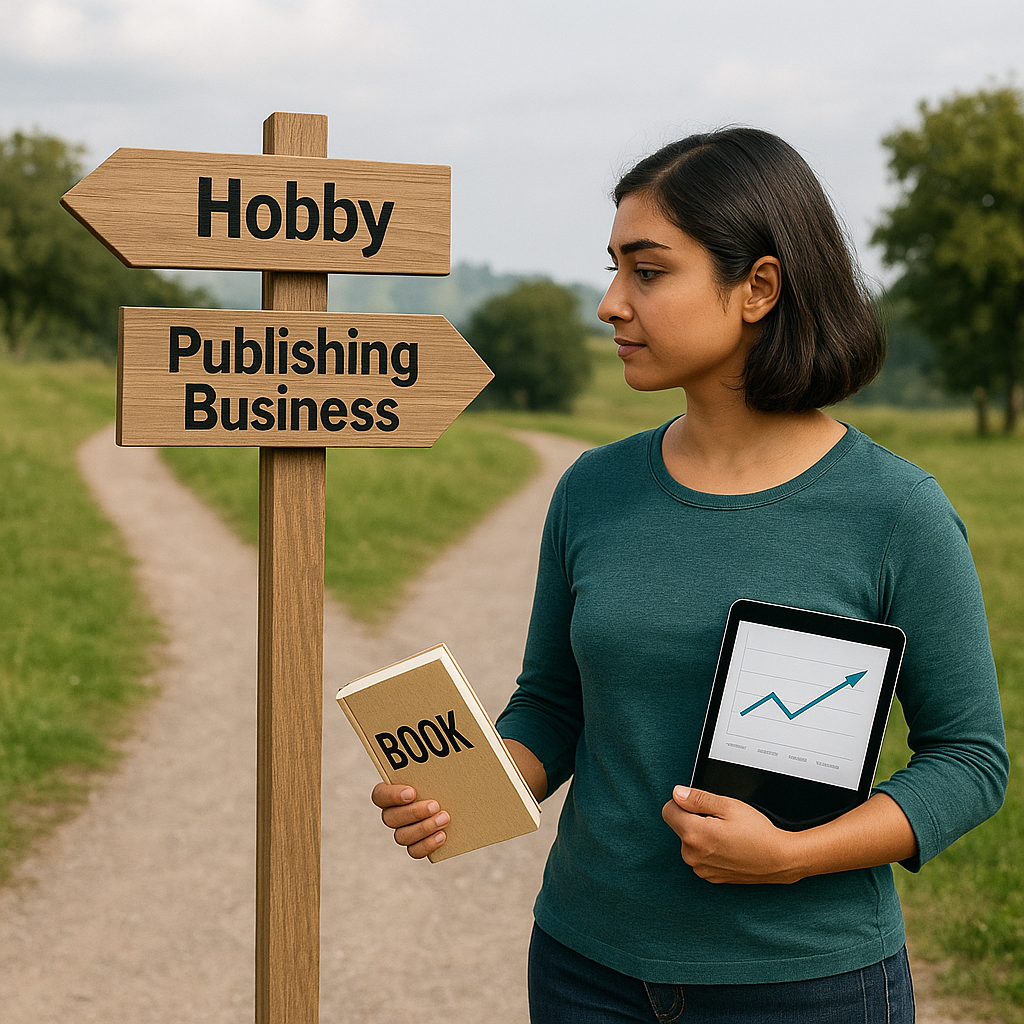
Market saturation and fierce competition
Let us be honest. There are millions of books on Amazon. You are not competing with a few shelves in a local store. You are competing with:
Bestselling indie authors with strong brands
Big traditional publishers
A flood of new books every single day
This does not make success impossible. It makes it strategic. You need a clear niche, strong positioning, and quality that can stand beside the top books in your category.
Ad costs, shrinking organic reach, and pay-to-play
Organic reach still exists, but it is weaker than it used to be. Amazon gives more spotlight to books that:
Convert clicks into sales
Maintain strong read-through
Are backed by ad spend
Amazon Ads are part of the game now. You do not need to spend thousands, but you do need at least a basic understanding of:
How to structure simple campaigns
How to set realistic budgets
How to measure ACOS and profit, not only clicks
Reviews, algorithms, and visibility struggles
Reviews act as social proof. Without them, conversion drops. Getting honest reviews is slow and takes effort. Launch teams, ARC readers, newsletter swaps, and communities all help here.
Amazon’s algorithm favors books that:
Get early sales and reads
Maintain decent conversion rates
Keep readers engaged and reading further in a series
If your book does not gain traction early, it sinks fast. That is tough, but it also pushes authors to plan launches more strategically.
AI-generated books and quality concerns
AI tools made publishing easier and faster. They also made spam easier. Readers now see more low-quality books, repeated content, and thin, unhelpful nonfiction.
The flip side is this. When overall quality drops, strong books stand out more. If you put in the work to write a real book, with heart, structure, research, and solid editing, you will look better than much of the noise.
WHAT HAS CHANGED BETWEEN 2020 AND 2026
Higher reader expectations
Readers have been trained by top indies and trad publishers. They expect:
Professional covers
Clean formatting
Strong hooks in the first pages
Consistent series and satisfying endings
Sloppy covers, weak openings, and unedited text lose readers within seconds.
Stronger focus on niche and series
One standalone book in a crowded genre is hard to sell. A focused series in a hungry niche is far easier.
Readers like binging. When they enjoy book one, they want book two ready, or at least coming soon. Authors who think in terms of “series and catalog,” not “single book,” have a big advantage now.
More professional competition from big indies and publishers
Traditional publishers now treat Amazon as a serious battleground. Big indies treat their books like product lines. The test covers copy, pricing, and ads. They use data.
If you jump in with a plain cover and no research, you are competing against people who treat this like a real business. That gap explains why many new authors feel disappointed.
The impact of AI tools on both good and bad books
AI is a tool. Some writers use it to:
Brainstorm ideas
Speed up outlining
Fix grammar and clarity
Help with blurbs and ad copy
Others use it to churn out unedited content. In 2026, you will share the platform with both groups. Your edge will be in combining tools with your unique voice, insight, and personal standard of quality.
WHO KDP IS STILL GREAT FOR IN 2026
Serious indie authors willing to treat it like a business
If you:
Want creative control
Do not mind learning marketing
Are willing to publish more than one book
KDP can still be one of the best paths for you. You write, package, and promote. KDP handles distribution and fulfillment.
Authors with a series or a long-term publishing plan
KDP suits authors who think in arcs, not one-offs. A trilogy, a long mystery series, or a set of related nonfiction books gives you:
Better ad efficiency
Stronger read-through
More ways to serve the same audience
Nonfiction writers solving clear, specific problems
Nonfiction still has strong potential when it focuses on a narrow, painful problem, with a clear audience. For example:
“Meal planning for type 2 diabetics on a budget.”
“First time dad survival guide for the first 90 days”
“How to self-publish your first coloring book on KDP.”
When the promise is clear, readers do not care who published it. They care if it helps.
Children’s books, low content, and when they still work
Children’s books and low content books are more competitive now, but they are not dead. They work best when:
You target a clear theme or audience, not generic “coloring book”
You bring unique art, humor, or interaction
You combine them with off-Amazon promotion, such as your own site or social media
WHEN KDP MIGHT NOT BE WORTH IT FOR YOU
If you expect fast money or overnight success
If your goal is “quick cash next month,” KDP will frustrate you. Self-publishing is slow at first. You build skills, a catalog, and an audience. Your first book might not be your best seller. Your third or fifth might.
If you hate marketing or learning basic business skills
You do not need to become a full-time marketer, but you do need to:
Understand your reader
Position your book
Learn basic ads, or at least basic promotion
If you refuse to touch any of that, you will depend on luck. That is not a strategy.
If you want total control outside Amazon’s system
If you dislike the idea of:
Exclusivity rules in KDP Select
Policy changes you cannot control
Relying on a single platform
Then a “KDP only” plan will not fit you. You might still use it, but as one piece of a wider strategy with wide distribution or selling directly.
HOW TO MAKE KDP WORTH IT IN 2026

Start with market research, not the manuscript.
Most struggling authors start with “I wrote a book I love,” and only later check if anyone wants that kind of book.
Flip that.
Validating your niche and category
Before writing or at least before finalizing, look at:
Top 20 books in your target category
Their covers, titles, subtitles, and blurbs
Their reviews, what readers love and complain about
If no one is buying “books like yours,” consider shifting or refining your angle.
Studying covers, titles, and reader expectations
Your cover does not need to be “unique.” It needs to look like it belongs among the bestsellers in your niche. Same with title style and length. Fit in first. Then stand out through content and voice.
Focus on quality that stands out
You are competing with strong books. Treat yours with respect.
Professional covers and blurbs
A cover and blurb are your storefront. Invest time, or money if possible, into getting both right. A beautiful book that no one understands will not sell. A clear, compelling promise with a clean, genre appropriate design will.
Strong editing and formatting
Readers forgive small issues. They do not forgive pages of errors, broken formatting, or unreadable text. At minimum, use:
Basic editing tools
A proofreader if budget allows
Clean formatting software or a formatter
Build a long-term catalog, not one book
KDP rewards persistence. Successful authors often have:
Multiple series or trilogies
Companion guides, novellas, or spin-offs
Books that share a universe, tone, or audience
Writing in series
A series turns one reader into many sales. If book one hooks them, they often buy or read through the rest. That is where your income compounds.
Expanding formats: ebook, paperback, audio
Give readers more ways to say yes. Start with the ebook and print. Add audio when possible, even if through lower-cost methods such as royalty-share deals with narrators.
Smart marketing for the 2026 KDP landscape
You do not need every tactic, but you need some.
Amazon ads: when to use them
Start small. Simple auto or keyword campaigns on one or two books. Watch what works, pause what wastes money, and slowly refine. Ads are data gathering, not only promotion.
Email lists and simple funnels
An email list gives you direct access to readers. Offer a free bonus, short story, checklist, or extra chapter to get signups. Send useful, interesting emails, not constant sales pitches. When you launch, these are the readers who support you first.
Social media and content that sells without begging
Choose one or two platforms where your readers hang out. Share content that entertains, teaches, or connects instead of “buy my book” every day. Over time, this builds trust and awareness that pays off at launch.




KDP VS. ALTERNATIVES IN 2026
Wide distribution on platforms like IngramSpark, Apple, Kobo
“KDP only” is not your only move. You can also:
Go wide with eBooks through Draft2Digital, Kobo, Apple, and more
Use IngramSpark for wider print distribution to bookstores and libraries
This spreads risk and grows your reach outside Amazon.
Selling direct with Shopify, Payhip, or WooCommerce
Many authors now sell directly on their own sites. Benefits include:
Higher margins
Control over pricing and bundles
Direct access to customer emails
You can combine this with KDP by selling special editions, bundles, or digital extras.
Hybrid and small presses
Some authors prefer a partner. Hybrid presses and small presses offer:
Help with production and distribution
Sometimes help with marketing
More support than going solo
You trade some control and royalties for time and assistance.
SO, IS KDP STILL WORTH IT IN 2026?
KDP is worth it in 2026 for authors who see it as one part of a real publishing business, not as a lottery ticket.
The mindset difference between “lottery ticket” and “business.”
Lottery ticket mindset:
“I uploaded a book. Where is my money?”
No research, no plan, no marketing
Blames Amazon when nothing sells
Business mindset:
Studies the market and readers
Invests in covers, blurbs, editing, and learning
Thinks in series, catalog, and long-term growth
What most successful KDP authors have in common
If you talk to full-time KDP authors, they usually share traits like:
Patience and persistence
Willingness to experiment and learn
Respect for readers and their time
Long-term thinking, not one-book desperation
FINAL THOUGHTS
So, is KDP still worth pursuing in 2026?
Yes, if you are willing to take it seriously.
KDP is not dead. It is maturing. The hobbyist, upload-and-hope approach is weaker. The professional, strategic, reader-focused approach is stronger than ever.
If you are ready to treat your writing like a real business, learn the basics of marketing, and build a body of work over time, KDP is still one of the best platforms to reach readers and earn from your books in 2026 and beyond.
FAQS
Is KDP too saturated in 2026 for new authors?
No, but it is more competitive. New authors break through by choosing clear niches, writing in series, using professional covers and blurbs, and focusing on specific readers instead of “everyone.”Do I need Amazon ads to succeed on KDP now?
You do not need them on day one, but they are very helpful, especially in competitive categories. Start with a small daily budget and learn how to target and track results instead of throwing money at random keywords.Is KDP Select and Kindle Unlimited still worth it?
For some genres, yes. Romance, thriller, fantasy, and some nonfiction niches do well in KU. If your readers love binge reading on subscription, KDP Select can boost visibility and income through page reads. You can test 90-day periods and adjust based on data.Can I still make money with low-content books on KDP in 2026?
Yes, but not with generic journals or notebooks slapped together. You need focused, high-quality books with a clear audience, such as niche planners, workbooks, or activity books that solve a real need or offer a fun, specific experience.Should I publish only on KDP or go wide in 2026?
There is no one right answer. If you write in KU-friendly genres and want fast visibility on Amazon, KDP Select can work well. If you want long-term stability, global reach, and less platform risk, going wide with multiple stores and selling direct is a strong strategy. Many successful authors blend both approaches over time.

Picking the best fiction genre to write in during 2026 comes down to one thing, matching what readers crave with what you love writing. This guide breaks down the strongest genres right now, the subgenres gaining traction, and how to choose a lane that keeps you motivated and sells.