How to Set Up a Reader Magnet with BookFunnel: A Step-by-Step Guide for Indie Authors
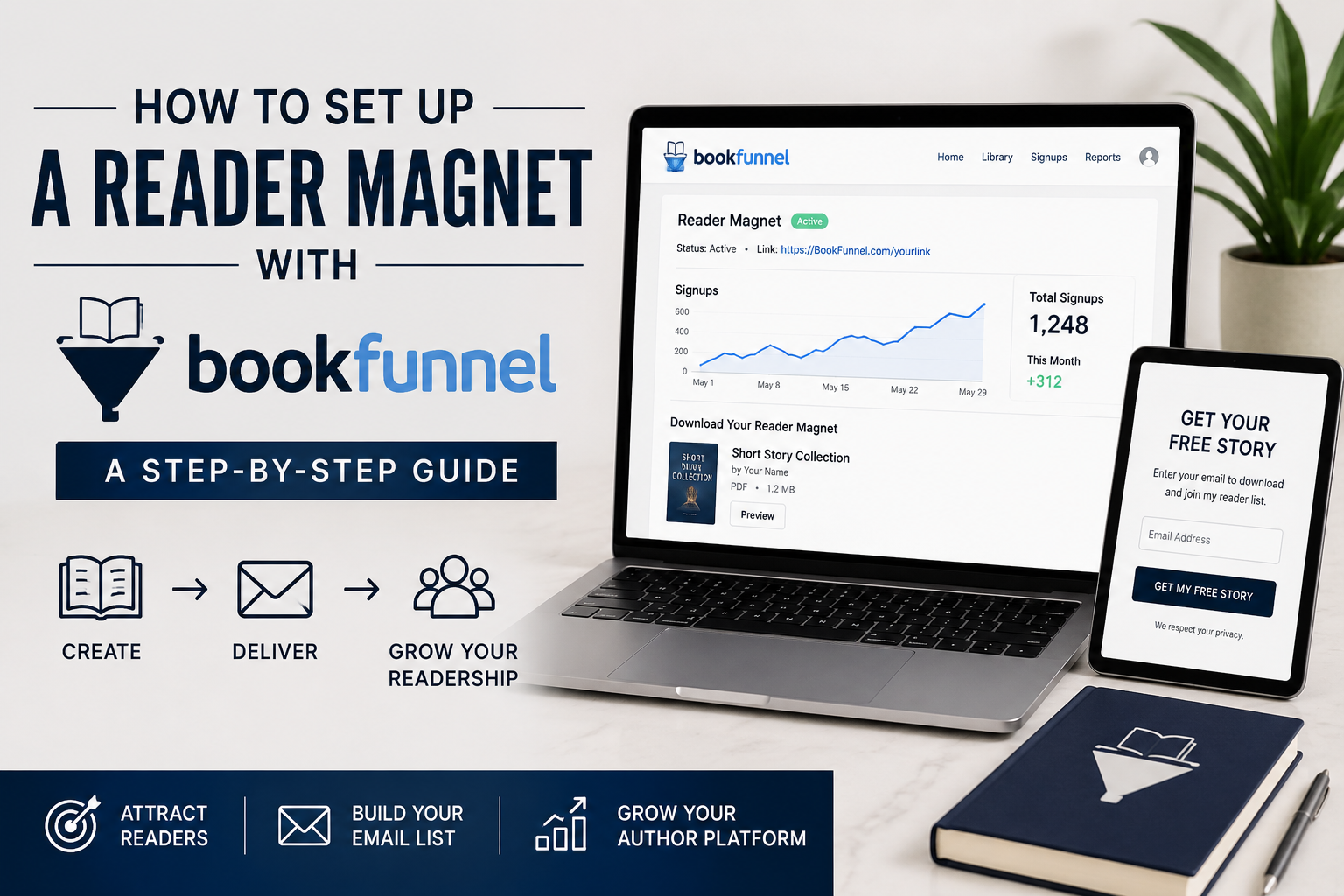
A reader magnet is one of the most practical tools an independent author can use to build an email list. Instead of asking readers to “join a newsletter” with no clear benefit, the author offers something specific in exchange for the reader’s email address. That offer may be a free novella, short story, bonus epilogue, sample chapter, worldbuilding guide, checklist, workbook, or other digital resource connected to the author’s books.
BookFunnel is commonly used by authors because it manages digital delivery. Instead of sending files manually, troubleshooting device issues alone, or attaching book files to emails, authors can use BookFunnel to host the file, deliver it to readers, and, on supported plans, connect the signup process to an email marketing service.
This guide explains how to set up a reader magnet with BookFunnel in a structured, professional way. It covers offer selection, file preparation, landing page setup, email collection, mailing-list integration, compliance considerations, testing, website placement, and basic performance review.
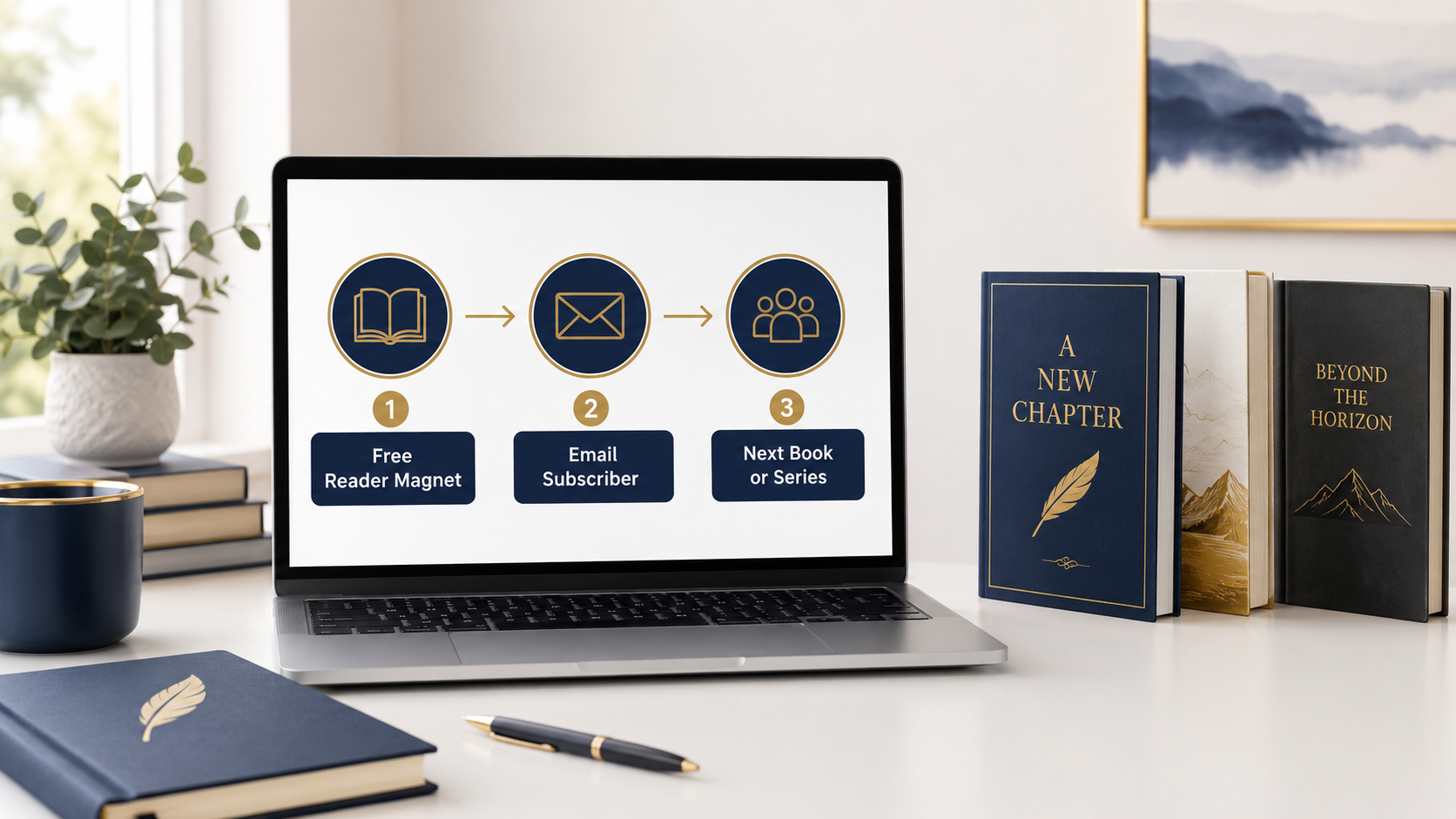
The goal is not only to upload a free file. The goal is to create a reliable subscriber acquisition system that introduces the right readers to the author’s work and directs them toward the next appropriate book, series, or resource.
What This Guide Covers
This guide explains how to:
Choose the right reader magnet for your audience.
Prepare the reader magnet file before upload.
Upload the file to BookFunnel.
Create a BookFunnel landing page that collects email addresses.
Connect BookFunnel to an email marketing platform when supported.
Use CSV export as a manual backup option.
Write clear signup-page copy.
Test the reader experience before promotion.
Add the reader magnet to your author website.
Monitor performance after launch.
This guide assumes that the author already has a completed digital file or plans to create one before beginning the BookFunnel setup process.
What Is a Reader Magnet?
A reader magnet is a free digital asset offered to readers in exchange for joining an author’s email list. In publishing and online marketing, this type of offer is sometimes called a lead magnet. For authors, “reader magnet” is the more specific term because the purpose is not to attract any subscriber. The purpose is to attract readers who are likely to enjoy the author’s books.
A strong reader magnet should meet three standards:
It should appeal to the same audience as the author’s paid books.
It should provide a complete and satisfying experience.
It should create a natural path to the next book, series, or author update.
A reader magnet should not feel like a discarded file. It should function as a professional first impression.
Common Reader Magnet Types
The best reader magnet depends on genre, catalogue size, audience, and business goals. Fiction and nonfiction authors often use different formats.
Fiction reader magnets
Common fiction reader magnets include:
A prequel novella.
A short story set in the same world as a series.
A bonus epilogue.
A deleted scene.
A first chapter sampler.
A side-character story.
A worldbuilding guide.
A map, glossary, or lore companion.
A romantic bonus scene for romance or romantasy readers.
A starter library with multiple short works.
For fiction, the reader magnet should connect directly to the books the author wants readers to buy. A fantasy author should avoid offering a generic writing checklist if the objective is to attract fantasy readers. A checklist may attract writers, not fiction readers.
Nonfiction reader magnets
Common nonfiction reader magnets include:
A checklist.
A workbook.
A sample chapter.
A resource guide.
A template.
A short practical report.
A worksheet.
A planning guide.
A quick-start guide.
A printable reference sheet.
For nonfiction, the reader magnet should solve a specific problem. A narrow offer usually performs better than a broad one because the reader immediately understands why it matters.
Step 1: Define the Purpose of the Reader Magnet
Before opening BookFunnel, define the business purpose of the offer. A reader magnet can support several goals, but one primary goal should control the setup.
Possible goals include:
Build an author email list.
Introduce readers to a specific series.
Promote Book One in a series.
Segment subscribers by genre or interest.
Deliver bonus content to existing readers.
Support a launch campaign.
Grow a review team or ARC team.
Move website visitors into an owned audience.
For most indie authors, the primary goal should be email-list growth. Social platforms are useful for visibility, but an email list gives the author a direct communication channel with readers who gave permission to be contacted.
A reader magnet should not exist in isolation. It should connect to a follow-up system, usually a welcome email sequence.
Step 2: Choose a Reader Magnet That Matches the Paid Offer
The reader magnet should attract the type of reader most likely to buy the author’s next book.
For example:
A romantasy author could offer a prequel scene featuring the central couple or a bonus epilogue after Book One.
A thriller author could offer a short case file connected to the protagonist.
A self-publishing educator could offer a KDP upload checklist or launch-planning worksheet.
A children’s author could offer printable coloring pages or a short companion story.
A fantasy author could offer a lore guide, map packet, or origin story.
Avoid reader magnets that are too disconnected from the paid catalogue. A giveaway can collect email addresses, but the wrong giveaway collects the wrong audience. A large email list has limited value if subscribers do not want the books being promoted.
Step 3: Prepare the Reader Magnet File
Prepare the file before creating the BookFunnel page. The reader magnet should be edited, formatted, and complete.
For an eBook-style reader magnet, prepare one or more common digital formats. EPUB is widely useful for fiction and narrative nonfiction. PDF may be appropriate for workbooks, checklists, worksheets, maps, printables, and heavily designed resources.
Before upload, confirm that the file includes:
A clear title page.
Correct author name or pen name.
Copyright information.
Clean formatting.
Working links.
A call to action at the end.
A link to the author website.
A link to the next book or series page.
A newsletter reminder, if appropriate.
No draft notes, comments, or placeholder text.
The reader magnet is free, but it still represents the author’s professional standard. Readers often use free content to decide whether they trust the author enough to buy a full book.
Step 4: Create or Confirm Your BookFunnel Account
Sign in to BookFunnel or create an author account. Review the available plan features before building the reader magnet system. BookFunnel offers different features by plan, and direct email-list integration may require a qualifying plan.
At minimum, confirm whether your plan supports:
Reader magnet delivery.
Landing pages.
Email address collection.
Direct mailing-list integration.
CSV export of subscriber data.
Multiple pen names, if needed.
Group promotions, if part of your marketing plan.
ARC or review-copy delivery, if needed later.
If direct integration is not available on the current plan, you may still be able to collect subscriber data and import it manually into your email marketing platform by CSV. However, manual importing requires discipline. If the author forgets to import new subscribers regularly, readers may receive the free book but not enter the author’s welcome sequence promptly.
Step 5: Upload the Reader Magnet to BookFunnel
After signing in, create a new book or digital item inside BookFunnel. Upload the reader magnet file and enter the necessary details.
Use a clear internal naming structure, especially if you publish under multiple pen names or manage several offers.
A practical naming format is:
Reader Magnet: [Series Name]: [Offer Title]
Example:
Reader Magnet: Ember Crown: The Weaver’s Oath
During setup, enter or confirm:
Title.
Author name or pen name.
Cover image.
Description.
File format.
Download settings.
Pen name settings, if applicable.
Support or delivery options.
After upload, open the file through BookFunnel’s reader-facing delivery process if available. Confirm that the file readers receive is the correct version.
Step 6: Create a Landing Page That Collects Email Addresses
A BookFunnel landing page gives readers a place to claim the reader magnet. For list growth, use an email signup page that collects the reader’s email address before delivering the free file.
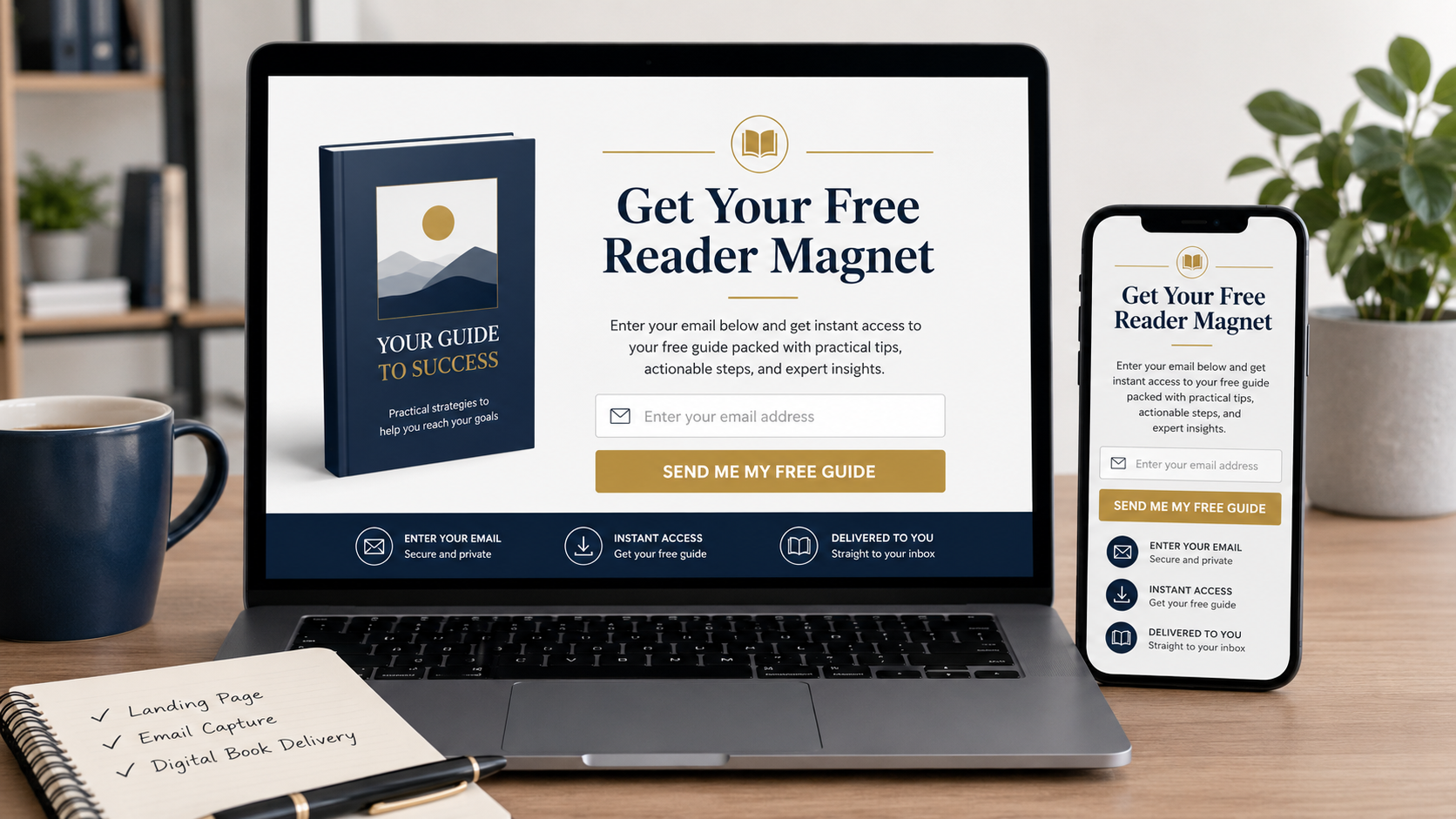
A strong landing page should include:
A direct headline.
A cover image or visual representation of the offer.
A concise description of the reader magnet.
A clear explanation of what the reader receives.
An email signup field.
Consent language, if required.
A simple call to action.
Optional genre or series context.
The landing page should not require the reader to work hard to understand the offer. The page should answer three questions quickly:
What do I get?
Why do I want it?
What happens after I enter my email address?
Step 7: Write Effective Reader Magnet Copy
The landing page copy should focus on the reader’s benefit. Avoid vague language such as “Join my newsletter for updates.” Most readers do not want updates from an author they do not know yet. They want a specific story, guide, bonus scene, checklist, or resource.
Weak signup copy
Join my newsletter for news, updates, and occasional announcements.
Stronger fiction signup copy
Get the free prequel story and enter a world of forbidden magic, dangerous courts, and enemies who should never become lovers.
Stronger nonfiction signup copy
Download the free KDP upload checklist and prepare your manuscript, metadata, categories, keywords, and preview review before you publish.
The stronger examples explain what the subscriber receives and why it matters.
Step 8: Connect BookFunnel to Your Email Marketing Platform
If your BookFunnel plan supports direct mailing-list integration, connect BookFunnel to your email marketing service. BookFunnel supports direct integration with several email platforms on eligible plans, including commonly used services such as Mailchimp, MailerLite, ConvertKit, ActiveCampaign, AWeber, Constant Contact, EmailOctopus, SendFox, and Sendy.
The exact setup steps depend on the provider, but the process usually includes:
Opening BookFunnel integration settings.
Selecting the email marketing provider.
Authorizing the connection.
Selecting the correct audience, list, group, form, or tag.
Saving the integration.
Testing with a new email address.
Use tags or groups whenever possible. Tags help identify where subscribers came from and what they requested.
Example tags:
Reader Magnet: KDP Checklist
Reader Magnet: Romantasy Prequel
Source: BookFunnel
Interest: Self-Publishing
Interest: Dark Romantasy
Tagging gives the author more control later. A subscriber who downloaded a self-publishing checklist should not receive the same launch emails as a reader who downloaded a dark fantasy bonus scene unless the author intentionally serves both audiences.
Step 9: Use CSV Export as a Backup or Manual Workflow
If direct integration is not available, BookFunnel may allow subscriber export by CSV depending on the page and plan settings. The author can then import those subscribers into the email marketing platform manually.
A manual workflow usually looks like this:
Create a BookFunnel signup page that collects email addresses.
Promote the BookFunnel landing page.
Export new subscriber data from BookFunnel.
Import the CSV into the email marketing service.
Apply the correct tag, group, or segment.
Confirm that subscribers enter the welcome sequence.
Manual importing can work, but it creates operational risk. New subscribers should receive the welcome sequence while the reader magnet is still fresh in their mind. If imports happen only once a month, the reader may forget why they subscribed.
For serious list growth, direct integration is usually the better long-term setup.
Step 10: Address Email Compliance Before Promotion
Email marketing requires consent, clear identification, and a working unsubscribe process. The specific legal requirements vary by country and audience location. In the United States, commercial email is governed by CAN-SPAM requirements. Other jurisdictions may have stricter consent and privacy rules.
At minimum, authors should use the following compliance practices:
Tell readers what they are signing up for.
Do not use misleading signup language.
Use a legitimate sender name and email address.
Include a physical mailing address or legally acceptable business address in marketing emails.
Include an unsubscribe link in marketing emails.
Honor unsubscribe requests promptly.
Do not add people to a list without permission.
Keep subscriber data secure.
Link to a privacy policy when collecting email addresses through a website.
Avoid buying email lists.
This guide does not provide legal advice. Authors with international audiences, advanced sales funnels, paid advertising campaigns, or complex data practices should review current email laws and platform requirements before collecting subscriber information.
Step 11: Connect the Reader Magnet to a Welcome Sequence
The reader magnet should lead into a welcome sequence. Without a follow-up sequence, the author may collect subscribers but fail to build a relationship with them.
A basic author welcome sequence can include:
Delivery email: confirms the free offer and sets expectations.
Introduction email: explains who the author is and what kind of books they write.
Series pathway email: directs the reader to Book One or the recommended starting point.
Value or behind-the-scenes email: provides lore, process, bonus material, or a useful resource.
Transition email: moves the subscriber into the regular newsletter schedule.
For a fiction author, the welcome sequence should continue the emotional and genre promise of the reader magnet. For a nonfiction author, it should continue solving the reader’s problem in a practical sequence.
Step 12: Test the Full Reader Experience
Testing is required. Do not promote the landing page until you have completed the full subscriber path yourself.
Use a new test email address and complete the process as a reader would.
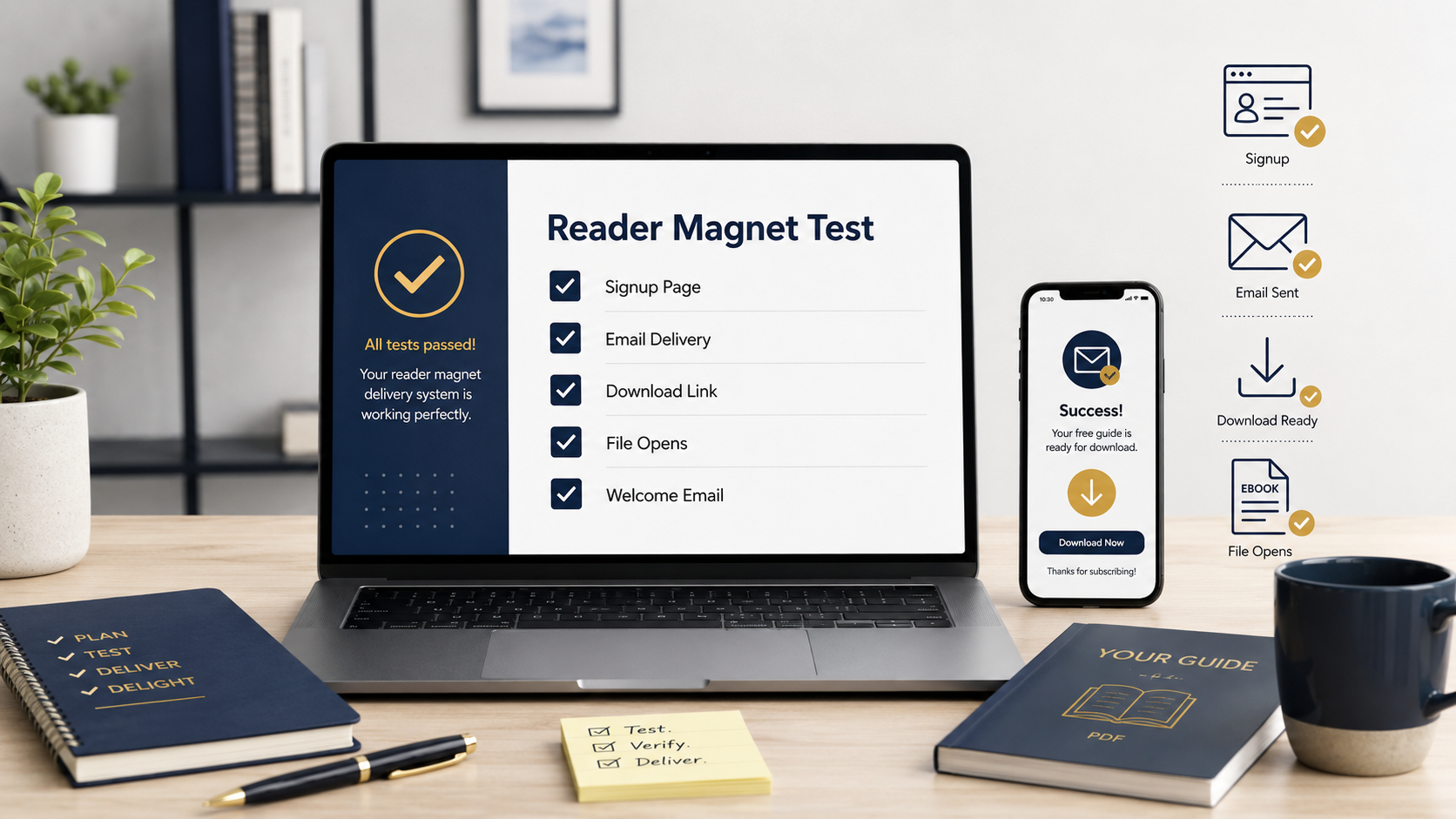
Test the following steps:
Open the BookFunnel landing page.
Review the page on desktop and mobile.
Enter a test email address.
Confirm the signup, if confirmation is required.
Download the reader magnet.
Open the file on at least one device.
Confirm that links inside the file work.
Confirm that the subscriber appears in the email platform.
Confirm that the correct tag or group applies.
Confirm that the welcome sequence begins.
Check the first email for formatting and link accuracy.
Unsubscribe from the test sequence to confirm the unsubscribe link works.
Testing should include the actual reader journey, not only the BookFunnel dashboard settings.
Step 13: Add the Reader Magnet to Your Author Website
After testing, add the reader magnet to the author website. The website should direct relevant visitors toward the signup page.
Recommended placements include:
Homepage hero section.
Blog sidebar.
Blog post call-to-action boxes.
Book series pages.
About page.
Footer signup area.
Dedicated “Free Book” or “Start Here” page.
Back matter of published books.
QR codes for events or printed materials.
Social media profile links.
Use placement based on visitor intent. A self-publishing checklist belongs near blog posts about KDP, author platforms, book marketing, or writing business strategy. A fiction bonus scene belongs near the related book or series page.
Step 14: Promote the Reader Magnet
Once the system works, promote the offer consistently.
Possible promotion channels include:
Author website.
Blog posts.
Email signature.
Back matter in published books.
Social media profiles.
Pinterest graphics.
BookFunnel group promotions.
Newsletter swaps with similar authors.
Paid advertising, after conversion testing.
Podcast guest pages or interview bios.
Do not promote the reader magnet broadly until the page converts and the follow-up sequence works. Traffic cannot repair a weak offer, broken download process, or unclear welcome sequence.
Step 15: Monitor Performance
After launch, review the reader magnet regularly. The goal is not only subscriber volume. The goal is qualified subscriber growth.
Track the following metrics:
Landing page visits.
Signup conversion rate.
Download completion.
Email confirmation rate, if double opt-in is enabled.
Welcome email open rate.
Welcome email click rate.
Unsubscribe rate.
Spam complaint rate.
Replies or engagement.
Sales or page visits from welcome-sequence links.
A high signup rate with high unsubscribe rates may indicate that the landing page attracts the wrong readers or that the welcome sequence fails to match the signup promise.
A low signup rate may indicate that the reader magnet is not compelling, the headline lacks clarity, the page design creates friction, or the traffic source does not match the offer.
Reader Magnet Quality Checklist
Before building the page, confirm that the reader magnet:
Matches the author’s genre, topic, or series.
Offers a clear benefit.
Looks professional.
Has been edited or proofread.
Includes correct author branding.
Includes working links.
Includes a next-step call to action.
Can be delivered in an appropriate file format.
Does not mislead the reader.
Supports the author’s broader business goal.
BookFunnel Setup Checklist
Before promoting the BookFunnel link, confirm that:
The correct reader magnet file has been uploaded.
The cover image displays correctly.
The title and author name are accurate.
The landing page collects email addresses, if list growth is the goal.
The landing page explains the offer clearly.
The correct email platform is connected, if direct integration is available.
The correct audience, list, group, or tag is selected.
CSV export is available if using a manual workflow.
The download process has been tested.
The welcome sequence begins correctly.
Website Placement Checklist
Before adding the reader magnet to your website, confirm that:
The call to action is specific.
The signup link works.
The offer appears on relevant pages.
The website has a privacy policy link.
The offer does not conflict with other signup forms.
The reader knows what they receive after subscribing.
The signup page works on mobile devices.
The same branding appears across the website, landing page, and email sequence.
Common Mistakes to Avoid
Offering a reader magnet that attracts the wrong audience
A reader magnet should match the audience for the author’s paid work. A broad giveaway may increase subscriber count, but subscriber quality matters more than list size.
Making the signup promise vague
“Join my newsletter” is weak. “Get the free prequel novella” is clear. “Download the KDP upload checklist” is clear. Specific offers convert better because readers understand the exchange.
Failing to test the integration
Do not assume the email connection works because the dashboard says it is connected. Test with a new email address and confirm the subscriber appears in the correct audience or tag.
Forgetting the welcome sequence
A reader magnet without a welcome sequence creates a weak first impression. Deliver the file, introduce the author brand, and direct the reader toward the next logical step.
Importing CSV files too slowly
If direct integration is not available, import subscribers regularly. Delayed follow-up reduces engagement and may confuse subscribers.
Ignoring compliance
Authors must collect email addresses responsibly. Use clear consent language, proper unsubscribe options, accurate sender information, and platform-compliant practices.
Using a low-quality free file
A reader magnet is often the first complete piece of the author’s work a subscriber receives. If the file looks careless, the reader may assume the paid books have the same quality problems.
Example Reader Magnet Workflow
The following workflow shows how a nonfiction author might use BookFunnel to grow an email list.
Create a PDF titled “The KDP Upload Checklist.”
Upload the PDF to BookFunnel.
Create an email signup landing page.
Connect BookFunnel to Mailchimp.
Apply the tag “Reader Magnet: KDP Upload Checklist.”
Create a five-email welcome sequence in Mailchimp.
Add the signup link to blog posts about self-publishing.
Add the link to the author website homepage.
Test the full process with a new email address.
Review conversion data after the first 100 visits.
The same structure can apply to fiction. Replace the checklist with a prequel novella, bonus epilogue, or short story connected to the paid series.






Conclusion
A reader magnet is more than a free download. Used correctly, it is the entry point into an author’s platform. BookFunnel helps manage the technical delivery process, but the author still needs a clear offer, accurate landing page copy, proper email-list connection, responsible consent practices, and a tested welcome sequence.
The strongest reader magnet systems are simple. They offer the right file to the right reader, collect the email address transparently, deliver the file reliably, and continue the relationship through relevant follow-up emails.
For indie authors, this system can become one of the most valuable assets in the publishing business. Retail platforms control product pages, algorithms, and visibility. An email list gives the author a direct way to reach readers, launch books, promote backlist titles, share updates, and build long-term reader trust.

A reader magnet can help authors turn casual visitors into email subscribers. This guide explains how to prepare a reader magnet, upload it to BookFunnel, create a signup page, connect an email platform, test delivery, and use the offer as part of a professional author platform.